News

Read our latest news below, or sign up for our annual newsletter to keep up to date.
Newsletter #1 - 2020
Newsletter #2 - 2021
Newsletter #3 - 2023
Newsletter #4 - 2024

Attention in infants is linked to differences in biological sex and socio-economic status
AIMS-2-TRIALS researchers have found that an infant’s ability to flexibly switch their gaze from one object to another (visual disengagement) differs based on their biological sex (male/female) and their socio-economic status (a measure of how income, education, and...

Closer collaborations needed between scientists and the autistic community
AIMS-2-TRIALS researchers, in partnership with ethicists at the University of Oxford and scientists at McGill University, have reviewed the ethics surrounding ‘early autism research’. This field of research identifies early changes in the developing brain (so-called...
Infants’ brain activity when seeing faces is written in their DNA
Infants with more of the genetic differences related to autism were found to respond to faces differently, even at a very young age, before signs of autism might be noticeable.Many thanks to Birkbeck for allowing us to reprint this article about AIMS-2-TRIALS...
Developing wearable technology with involvement from autistic people
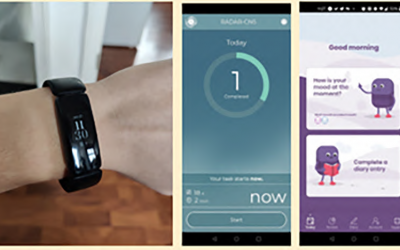
AIMS-2-TRIALS researchers are working alongside autistic people to develop technology that objectively measures aspects of their experience. Wearable devices, such as smart watches, can include sensors to record information like heart rate and skin conductivity and...
AIMS-2-TRIALS innovations are among those selected for EU Innovation Radar Platform
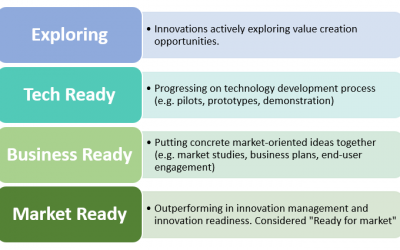
Innovation Radar is a European Commission initiative to identify innovations and innovators in EU-funded research. AIMS-2-TRIALS recently submitted several important developments to the scheme, receiving positive feedback and inclusion within the Innovation Radar...
Reviewing healthcare barriers for autistic people
Our news item published on May 19th 2021 highlighted ways that the COVID-19 pandemic has exacerbated existing healthcare inequalities for autistic people. We now report on a recently-published systematic review that aimed to identify the broader range of healthcare...
COVID exacerbates healthcare inequalities for autistic people
According to a new AIMS-2-TRIALS study published today in BMJ OPEN, the COVID-19 pandemic has further exacerbated existing healthcare inequalities for autistic people and has likely contributed to disproportionate increases in morbidity and mortality, mental health/...
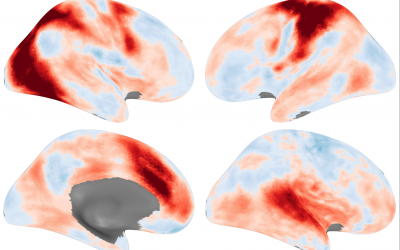
Distinct behavioural profiles of autism matter
New AIMS-2-TRIALS research finds that autistic people with more social communication difficulties have different brain connectivity compared to autistic people with an equal mix of social traits and repetitive behaviours. Background A diagnosis of autism includes the...
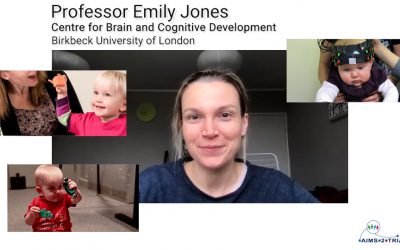
Professor Emily Jones on PsychologiCall Podcast
Listen to AIMS-2-TRIALS researcher Professor Emily Jones talk about her work on theta waves and information processing on the PsychologiCall podcast. During this podcast she talks about her research looking at how changes in early brain activity may predict later...

Attentive brain states to faces in infants with and without later autism
Autistic children can have differing preferences for social stimuli such as faces compared to non-social stimuli, and research suggests that differences in brain activity could underlie this and be predictive of later autism. A team of researchers including Dr Anna...
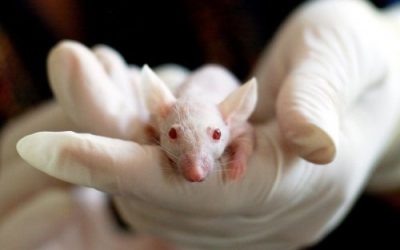
New AIMS-2-TRIALS research on social behaviour in the mouse and what it can tell us about autism
Autistic people often report problems forming social relationships, but we do not yet understand what it is about autistic brains that causes the difficulty. A team of researchers from Ulm University in Germany, including Tobias Boeckers of AIMS-2-TRIALS, have been...

What do AIMS-2-TRIALS Autism Representatives (A-Reps) do?
Autistic people have long made the case that they should be involved in research about them and many researchers now consider this to be part of the standard research process. This involvement is sometimes referred to as ‘participatory research’ and can be done in a...
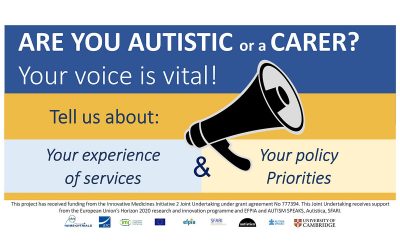
What services do autistic people want? What improvements are needed? Time to let policymakers know.
Many autistic people will tell you they have struggled to access a service, or perhaps more than one, whether that be health or social care, employment support, financial assistance, an educational programme, or one of many others. But policymakers can’t commission...
Are there differences in the brains of autistic men and women?
Around three times as many males are diagnosed with autism than females, which suggests that sex-related biological factors play a key role in its development. However, little is known about the ways that autistic males and females differ in terms of brain structure...
AIMS-2-TRIALS research into autism subtypes at Birkbeck
Professor Emily Jones and her team at Birkbeck University of London are undertaking a range of research activities that follow children from infancy, or even pregnancy, into later childhood. Many of the children have parents or older siblings who are autistic and...
New AIMS-2-TRIALS database developed by Institut Pasteur
A world-leading AIMS-2-TRIALS team at the Institut Pasteur (Paris) has developed a secure database to address the needs of the AIMS-2-TRIALS project, ensuring that large, multidisciplinary datasets from participants across Europe are secure, GDPR compliant and easily...

Reduced flexible behaviour in autism is driven by less optimal learning
AIMS-2-TRIALS researchers from King’s College London have revealed that reduced flexible behaviour in autistic people is underpinned by different dominant learning mechanisms across development, and less optimal learning. Background Flexible behaviour is critical for...
UPDATE: Favourable feedback from European Medicines Agency
Letters of support now available on the EMA website. The AIMS-2-TRIALS consortium has received feedback (qualification advice) from the European Medicines Agency (EMA) on the further exploration of EEG (electroencephalography) as a potential ‘biomarker’ in autism...

Exploring the genetics of how infants look at faces and how this may be linked to autism
Genetic instructions in our DNA are able to build a human from scratch and no two human beings are perfectly identical; we differ in our height, eye color, how we look, think, feel and act. Scientists know that differences in our DNA code explain some of these...

Autistic people focus on social information differently to non-autistic people
Over the last decade, researchers have worked hard to identify reliable ways to measure and track the emergence and progression of autism. One promising area of focus has been exploration of how autistic people focus their attention on social cues. Our research In...
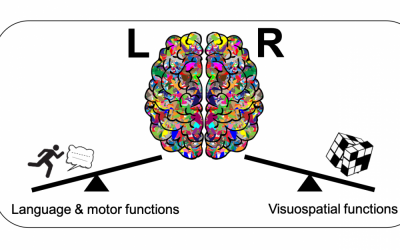
Asymmetrical brain patterns can help identify subgroups of autistic people
Autism is a condition that varies a lot between individuals, which means that any therapy or treatment is unlikely to be useful for all autistic people. However, most research does not take such differences between autistic individuals into account. Researchers need...