
The Preschool Brain Imaging and Behaviour Project (PIP)

Welcome! Welkom! Välkommen! Wilkommen! Bienvenue!
The Preschool Brain Imaging and Behaviour Project was the first Europe-wide study to track the development of preschool children with and without autism and related neurodevelopmental conditions. The study involved researchers from the UK, Belgium, the Netherlands, France and Sweden. The project is part of the AIMS-2-TRIALS and CANDY consortiums.
Recruitment for this study has been completed but you can find details about the study sites and teams involved via clicking the country buttons.
.What were our goals?
PIP was designed to answer two important questions about children’s development.
Understanding how children develop
Our first goal was to better understand how genetic and environmental factors influence brain development and function, and how these contribute to children’s social, cognitive, and emotional development.
Making better predictions and improving support for neurodivergent children
Our second goal was to identify early markers and developmental pathways that might help us better predict outcomes for children with known or suspected neurodevelopmental conditions. Ultimately, we hope this knowledge will help us understand children’s individual support needs and inform more personalised approaches to care and intervention.
What did the study involve?
In the PIP study, we tracked the development of a large cohort of pre-schoolers over the course of three years.
We asked parents or caregivers to complete questionnaires and interviews about their child’s behaviour, development, temperament, and environment.
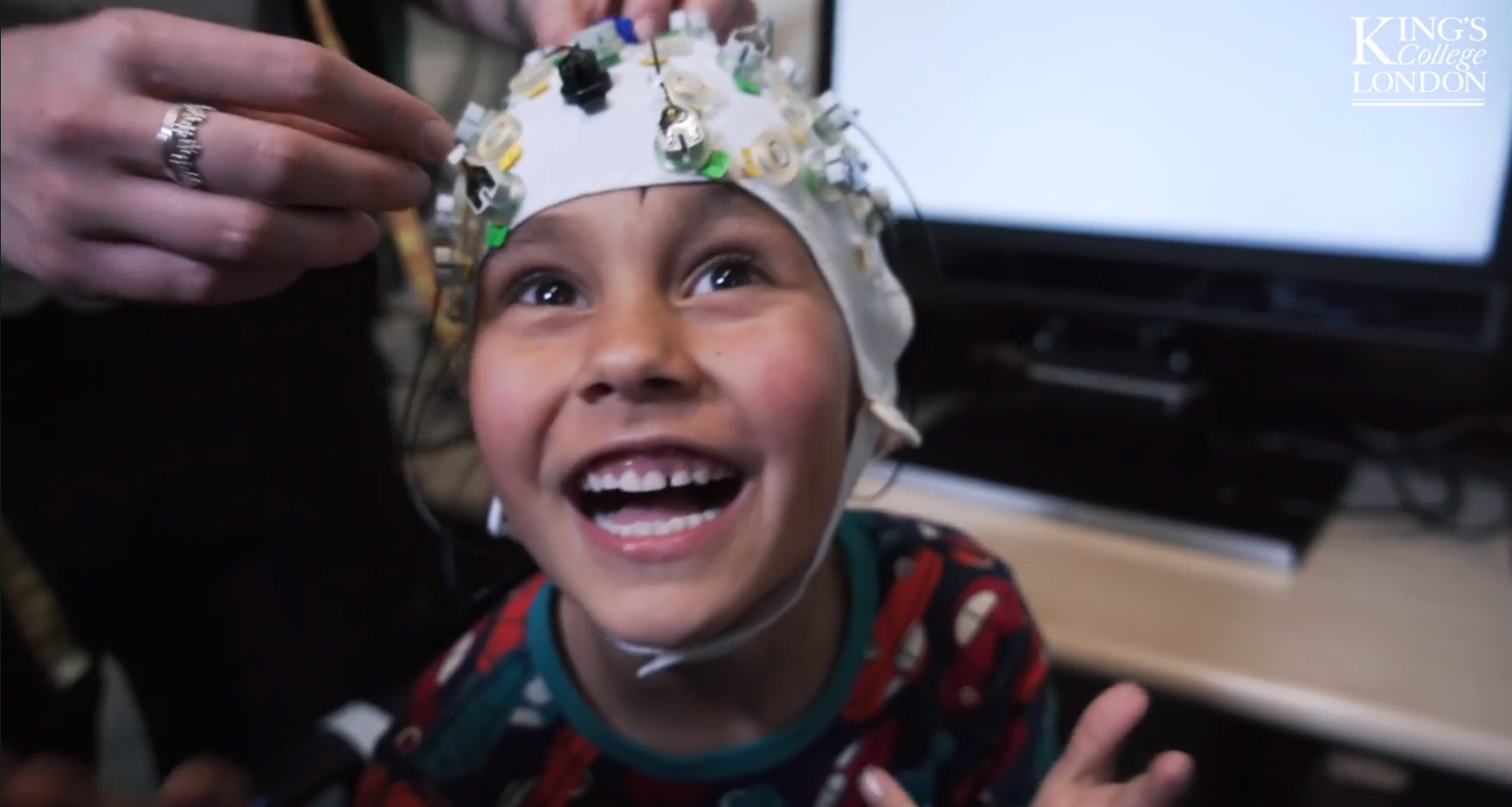
Children completed interactive games, touchscreen tablet tasks and eye-tracking. We also measured children’s brain activity and development using brain-imaging techniques, called EEG and MRI.
What did the PIP study find out?
What is the clinical profile of each PIP child?
When we compared children according to diagnosis (autism, developmental delay, ADHD or typically developing), we found the expected group differences on average: autistic children showed more autism-related characteristics, children with developmental delay had lower developmental scores, and children with ADHD showed more ADHD-related characteristics.
However, this is not the complete picture. Children with different diagnoses often share many of the same strengths and challenges. There is considerable overlap between diagnostic groups. For example, two children with the same diagnosis can differ substantially from one another, while two children with different diagnoses may show remarkably similar profiles.
We also found that there are some differences between countries, reminding us that children’s development is influenced by many factors, including the environments in which they grow up.
Are there particular differences in brain anatomy?
One of the distinguishing features of PIP is that it is the first European brain imaging study of neurodivergent preschoolers. Previous studies have scanned infants during sleep (as infants sleep for much of the day), and others have scanned neurodivergent children of school age (including our own LEAP study). Preschoolers, however, present unique challenges. They are highly mobile and have their own distinct personalities and preferences, which makes data collection considerably more complex.
At the group level, we did not find major differences between autistic and neurotypical brains. This, however, is only the beginning of our analysis. We are now examining individual differences across the brain, with particular attention to regions known to be involved in social, cognitive, and emotional development.
Emotional challenges
Another important early finding is that emotional challenges are fairly common; 30% of autistic preschoolers at age 3-4 years and 40% of ADHD preschoolers also had emotional challenges. They were moderate-highly linked to sensory sensitivities.
We now need to understand whether sensory sensitivities may be an important factor that causes anxiety, or whether anxiety may lead to more sensory sensitivities or whether this relationship may be due to another factor.
We would like to test what underlies sensory sensitivities and for that we look at differences in brain structure, function, and brain chemistry; in particular neurotransmitters that impact how different brain areas communicate with each other.
We believe it is important to develop early support or, in the future possible ways to prevent mental health challenges.
With thanks to the PIP puppet production team.