EURORDIS awarded Roche and King’s College London the 2026 Company Award for Patient Engagement*, in recognition for their work with people with rare genetic conditions and the autistic community in the AIMS-2-TRIALS consortium.
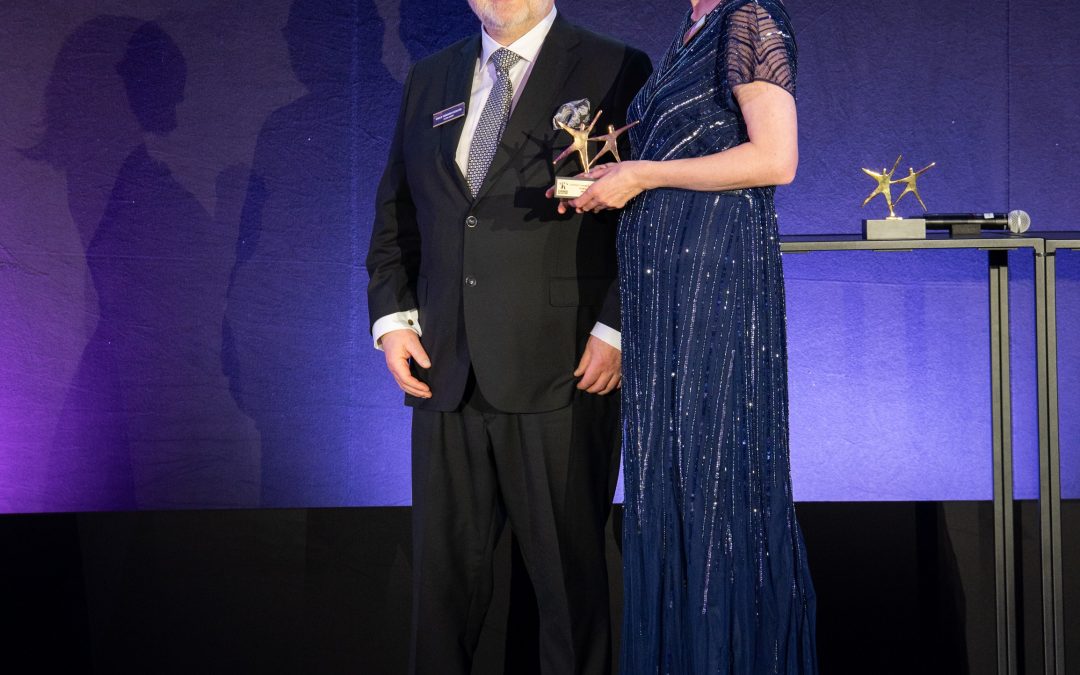
On 24 February 2026, at the EURORDIS Black Pearl Awards ceremony in Brussels, the Company Award for Patient Engagement was presented to Roche and King’s College London (KCL) in recognition of their leadership of the AIMS-2-TRIALS project. The award was granted in recognition of the commitment of AIMS-2-TRIALS leaders to involving autistic people and people with rare genetic conditions, as equal partners in this initiative.
Harald Neerland, Autism Europe President, presented the award to Professor Emily Jones from King’s College London (KCL) and Birkbeck, University of London. Other representatives from KCL and Autism-Europe who attended the ceremony included Dr Bethany Oakley and Professor Tony Charman (KCL), and Aurélie Baranger (Autism-Europe).
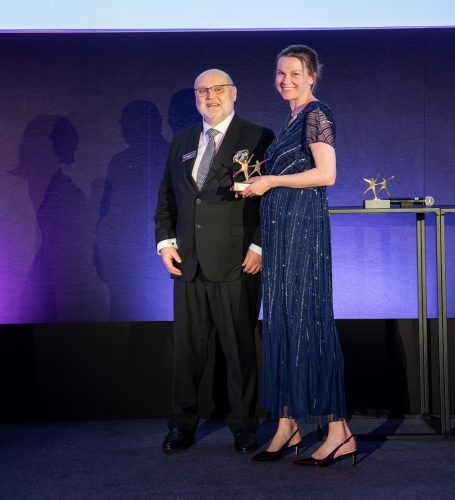
Caption: Professor Emily Jones from King’s College London (KCL) and Birkbeck, University of London (right), receiving the award and Harald Neerland of Autism Europe (left), presenting the award.
Based on the nomination criteria, the award recognises organisations that demonstrate a long-term, constructive commitment to meaningful collaboration with participants across the full medicine development lifecycle. Awardees demonstrate sustained engagement with people with lived experience in key research and development decisions, supported by strong internal awareness, capability, and planning. The criteria also consider evidence of real impact, such as the integration of participant-informed outcomes, experiences, and priorities into decision-making.
EURORDIS commented:
“Not only is the project contributing to improving the health outcomes of underserved autistic communities, it is also exploring rare genetic conditions associated with autism, including Phelan-McDermid syndrome, Fragile X and SHANK-related disorders. The direct involvement from people living with autism and rare neurodevelopmental diseases across the entire project has led to a better understanding of shared biological pathways and to an improved infrastructure for clinical trials across Europe, benefiting communities previously underrepresented in research.
Embedded in genuine trust and collaboration, AIMS-2-TRIALS stands out as a best practice example where the input of participants with lived experience of autism has significantly shifted perspectives in conducting research, sharing data or developing meaningful outcome measures. EURORDIS commends the project leads for ensuring that the needs and priorities of autistic people, including those living with rare genetic conditions associated with autism, are appropriately represented in shaping the solutions that can improve their lives.”
Bethany Oakley from King’s College London, who attended the ceremony, said:
“A key highlight at this awards event was that it showcased the impact and momentum that can be built when many communities come together in support of a common goal. Diverse rare genetic conditions communities were represented, all agreeing on priorities such as the need for earlier and more efficient diagnosis, and post-diagnostic information and support, better targeted treatment options to be available to serve individual needs, and wider public acceptance”.
This achievement marks an important moment for the consortium as it enters the final year of the project. Congratulations to everyone involved in AIMS-2-TRIALS whose dedication has helped advance and improve meaningful participant engagement.
*The AIMS-2-TRIALS Communications Team acknowledge that preferred language in this context would be community engagement or participant engagement. We are unable to alter or change the name of this award.